Read the common name, ingredient list, product style, Nutrition Facts table, package size, date and lot information, and storage directions as one set of clues. Front-of-pack design alone cannot answer all of those questions.
Six label checks
Turn the bottle around.
This is not a ranking system. It is a quick way to identify what you are buying and whether it fits the job.
01 / Common name
Start with what the bottle says the oil is.
A single-source bottle sold as canola oil should identify canola oil as the common name. A product called vegetable oil may contain more than one type of oil, so read the ingredient list when source matters to you.
Do this
Read the front name and the ingredient list together.
Avoid the shortcut
Do not assume every bottle labelled vegetable oil contains the same blend.
Choose for the job
Three practical buying scenarios.
Everyday neutral cooking
Look for a clearly named oil, a manageable bottle size, a secure closure, and a product style that suits mild-flavoured cooking.
Read an oil bottle in the order that answers your questions
Work through identity, ingredients, serving size, dates and practical storage information before interpreting the front-label story.
Original editorial guide · October 24, 2026
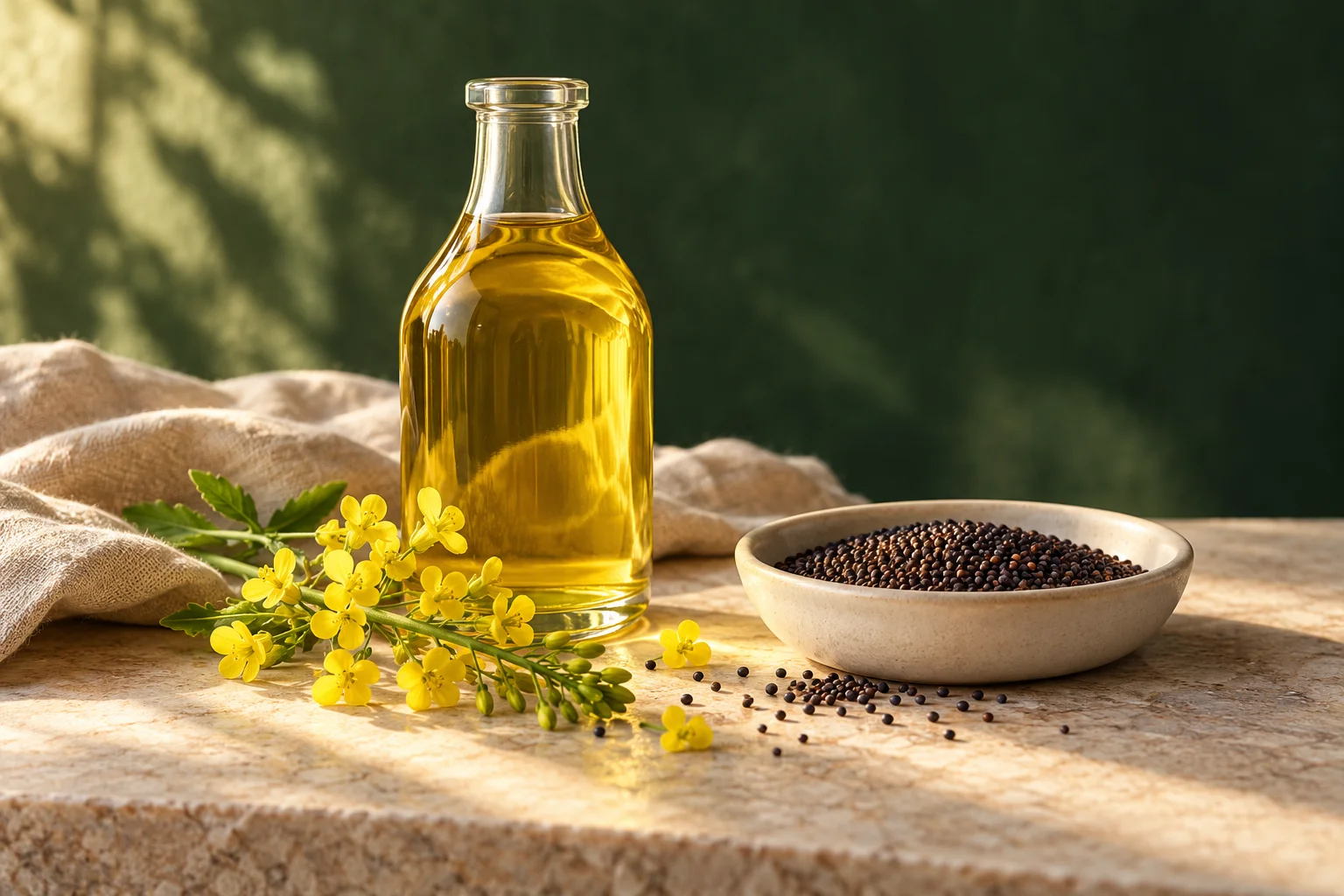
Original editorial illustration; no product endorsement or recipe test depicted.
Start with the common name
Turn the bottle until you can read the common name clearly. In Canadian labelling guidance, a single-source vegetable oil uses the specific oil name. A vegetable-oil blend can follow different naming rules, so the ingredient information becomes especially useful. The large word on the front and the detailed description elsewhere on the package should be read together.
For a kitchen purchase, write a plain answer: this is canola oil, or this is a blend containing the oils listed. That small distinction is more useful than beginning with the colour of the label or an attractive landscape photograph.
Give processing words their own line
Record terms such as refined or cold pressed separately from the ingredient identity. They describe another part of the product story. If a process preference is important to you, read the complete description instead of inferring it from a premium appearance or a higher price.
A practical comparison sheet has room for both facts and unanswered questions. One column can describe what the package explicitly says; another can hold what you would need to ask. Keeping them apart helps avoid treating an assumption as a feature of the product.
Read the serving before the numbers
The Nutrition Facts table describes a stated serving. Health Canada's guidance explains that this is not a recommendation for how much to eat. Your own portion may be different. When comparing bottles, check that the quantities being compared are equivalent before interpreting the nutrient numbers.
This is particularly useful when the recipe amount will be divided among several people. First understand the label's measurement; then consider the amount the recipe uses and the portions it produces. Keep that arithmetic separate from claims about what an ingredient will do for an individual person's health.
Read dates alongside storage instructions
A best-before date describes quality under the relevant storage conditions for an unopened product. It is not a complete assessment of the bottle after opening. Find any storage directions, look at the condition of the container and make the opening date easy to find later.
When a date or code is unclear, photograph it before discarding the package. A product name, lot code and purchase record make a more useful question for the seller than a description from memory. Do not interpret an unfamiliar production code as a date unless its meaning is confirmed.
Finish with the purchase decision
Now put the bottle back into its everyday context. Will its size suit how often you cook? Can you store it as directed? Is the closure easy to keep clean? Is its stated use a match for the food you have planned? These questions connect label reading with a purchase you can actually use well.
Keep a brief note for the next shopping trip: identity, size, price, intended use and anything you liked or wanted clarified. You do not need a verdict on an entire category. You need enough reliable information to choose this ingredient for your kitchen.