Skip to content
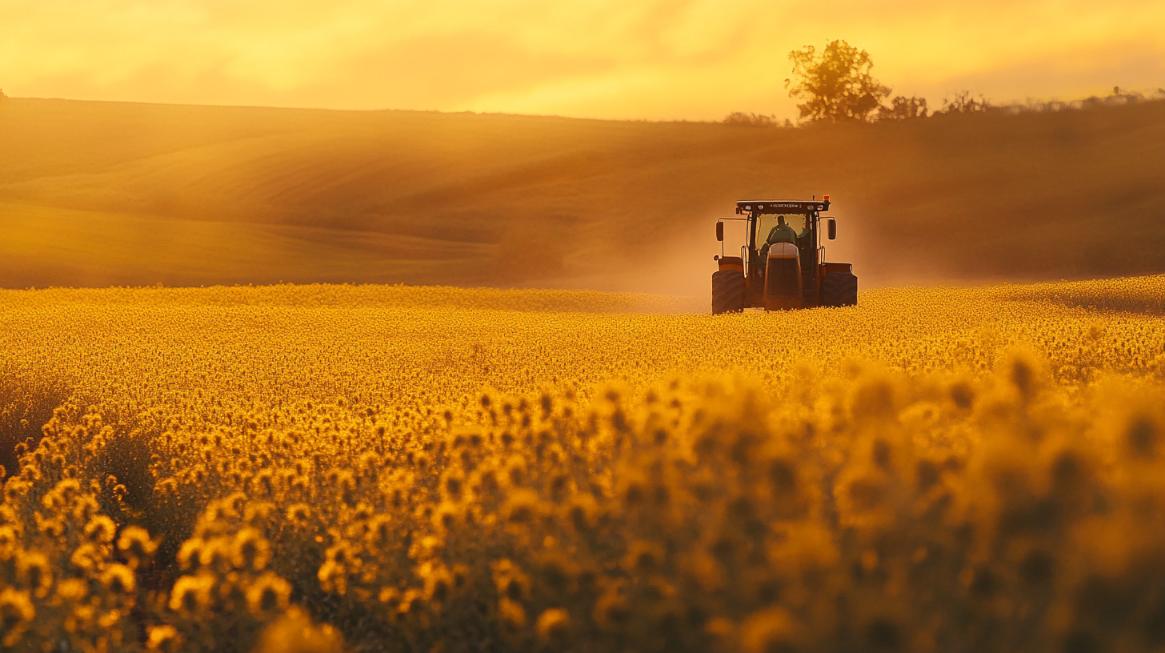
FRSH visual interpretation of farm machinery working in a flowering canola field

From soil to stored seed

Canola Field Encyclopedia

Read the crop behind the oil: how canola grows, what changes across the season, how harvested seed is handled, and where the field story meets processing and food.

01Crop systems02Field season03Harvest04Value chain

Begin in the field

Canola oil has a growing season.

Follow canola from rotation and seeding through flowering, pod development, harvest and storage. Each article begins with what can be observed in the field, then follows the seed toward processing and explains why that agricultural context matters beyond the farm.

One crop season

Follow canola from seed to stored grain.

The crop changes continuously. These six chapters provide the biological and operational sequence behind the harvested seed.

Read by system

A field is biology, weather, work, and movement.

Crop system

Rotation, soil, weather, field pressure, operations, and seasonal decisions.

Explore the system
Seed quality

Sampling, dockage, grading factors, storage condition, and delivery language.

Explore the system
Processing chain

Receiving, preparation, oil separation, meal, refining, and products.

Explore the system
Canadian geography

Production regions, soil zones, climate gradients, freight, and crushing connections.

Explore the system

Crop visibility

Yellow flower stage

Flowering is the crop moment most readers recognize, but it is only one point in a longer field-to-oil story.

Flowering marks the transition into reproductive growth. Buds, open flowers, fading petals, and young pods can appear on the same plant, so a yellow field represents a period of development rather than one uniform instant.

Open full entry

Browse field stories on crop development, harvest, seed condition, processing and the journey toward the kitchen. These articles explain agricultural context; they are not current-season agronomic advice.

Crop visibility

Yellow flower stage

Flowering is the crop moment most readers recognize, but it is only one point in a longer field-to-oil story.

A yellow canola field signals active flowering, pollination activity, weather exposure, and a crop that still has several steps before harvested seed exists.
Seed formation

Pod set and seed fill

Pod set and seed fill are where the field story starts to look more like the oil story, because the crop is moving toward harvested seed.

Pods form after flowering and carry developing seed. Weather, crop condition, timing, and field variability can all affect how the stage is discussed.
Field-to-handling bridge

Harvest timing context

Harvest timing belongs in the public story because it explains why seed condition and handling sit between the field and finished oil.

A canola crop moves toward harvest after maturity, with decisions shaped by weather, field conditions, equipment, local practice, and seed condition.
Processing entrance

Seed cleaning and preparation

Before oil separation, harvested seed has to become process-ready material. That entrance step makes the processing story more concrete.

After harvest, seed can carry field context with it: plant material, storage conditions, handling history, movement, and receiving checks.
Product style

Refining style context

Refining style can affect flavour, consistency, and kitchen fit, but it should not be used as a shortcut for broad claims.

Refining happens after crop production, harvest, seed handling, preparation, and oil separation. It is downstream of the field but still part of the crop-to-kitchen chain.
Regional literacy

Prairie growing context

Prairie canola grows across broad gradients of soil, moisture, heat, frost exposure, field access, infrastructure, and distance to market.

Prairie canola discussion often involves soil zones, moisture variability, frost timing, field access, harvest windows, storage, transport, and processing geography.
Field systems

Rotation and field history

Canola is part of a multi-season field system, not an isolated yellow-field moment.

A field has history: previous crops, residue, soil condition, field pressure, weather, access, and management context can all shape how canola is discussed.
Field conditions

Soil moisture and field access

Soil moisture and field access help readers see why crop production is conditional, local, and time-sensitive.

Fields can be too wet, too dry, compacted, variable, or simply not ready for equipment at the moment a task would otherwise make sense.
Plant health context

Field pressure language

Canola grows within a living field system where weeds, insects, diseases, weather, soil conditions, and crop stage continually interact.

Field pressure can include weeds, insects, plant disease language, weather stress, residue context, rotation history, crop stage, and scouting vocabulary.
Handling context

Seed storage before processing

Seed storage is a quiet but important bridge between the field and the processing pathway.

After harvest, seed may move through storage, handling, transport, receiving, cleaning, and preparation before oil separation.
Seed-to-oil step

Crushing and oil separation

Crushing transforms prepared canola seed into two principal material streams: crude oil and protein-rich meal.

The field contribution has already passed through harvest, seed condition, movement, storage, and preparation before oil separation becomes the main topic.
Whole-seed context

Meal after oil separation

Oil is not the only output of seed processing, and that fact can make the crop story more complete when handled carefully.

The harvested seed carries oil and other material into processing. After oil separation, meal belongs to the broader processing and use story.
Label literacy

Label origin versus crop origin

A field story can explain canola agriculture, but a label is the place to look for what a specific product is willing to say.

Crop origin can involve field region, seed movement, processing location, packaging, distribution, brand language, and retailer context.
Product style

Cold-pressed canola context

Cold-pressed canola oil can be discussed as a product style without turning it into a universal verdict.

Cold-pressed language is downstream of crop production and seed handling. It belongs in processing and product-style context.
Trait and product stream

High-oleic canola context

High-oleic canola is a product-stream and trait topic that needs careful translation for readers.

High-oleic language begins with crop and seed identity, then moves through product streams, processing, labels, kitchen use, and foodservice decisions.
Media literacy

Field photo interpretation

Field photos are useful when they teach the chain, not when they quietly imply more than they show.

A field photo may show flowering, rows, pods, harvest equipment, storage, or landscape, but it rarely proves product origin or quality by itself.
End-of-chain literacy

Used oil and the waste loop

The field-to-kitchen chain does not end at cooking. Used oil and waste decisions are part of the practical reader story.

Waste-loop thinking connects the original crop, processing, packaging, kitchen use, leftover oil, cleanup, collection, and local disposal context.
Crop development

How Canadian research shaped canola

Canola is a Canadian agricultural innovation built through patient research, plant breeding, field testing, and farmer adoption.

Modern canola fields are the visible result of decades spent selecting plants, evaluating seed quality, testing varieties, and learning how the crop performs in Canadian conditions.
Seed systems

Variety registration and seed identity

Before a named canola variety reaches a field, identity and registration systems help keep the variety distinguishable and traceable.

A bag of planting seed carries a variety name, seed class, quality information, and a chain of multiplication that begins well before commercial crop production.
Value-added processing

Domestic canola crushing

Crushing is the industrial hinge between harvested Canadian seed and the oil and meal streams used by food, feed, fuel, and technical markets.

After harvest and storage, canola seed moves toward facilities that receive, clean, prepare, press, extract, and separate the components of the seed.
Grain logistics

How canola moves across the Prairies

Between a harvested field and a processor or export terminal sits a physical network of storage, testing, roads, elevators, trucks, rail, and contracts.

A combine unloading seed is only the beginning of grain movement. The crop may be stored on farm, sampled, delivered by truck, transferred through an elevator, or moved by rail over long distances.
Field to future

The future of canola research

Canola began as a research achievement. Its next chapter will depend on how well science, farms, processing, markets, and digital tools continue to learn together.

Future research starts in many places: breeding plots, commercial fields, laboratories, processing facilities, livestock studies, kitchens, satellite imagery, sensors, and farm records.

Continue beyond the entries

Connect field observations to deeper research.

Move into long-form crop research, seasonal field operations, regional production, or the processing pathways that carry harvested seed into oil and meal.